
Issues around (non) implementation of EU Air Quality Directive
What is the problem with air quality?
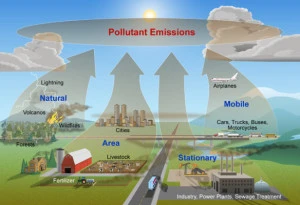
Pollutants emitted into the air we breathe from various sectors like industry, motor vehicles, agriculture and heating are responsible for bad ambient air quality (AQ), which has been recognised by the Word Health Organisation (WHO)[1] as the single largest environmental health risk in Europe, responsible for 482 000 premature deaths in 2012. 90% of the European population is exposed to annual levels of outdoor atmospheric pollutants that are above WHO’s air quality guidelines. Fine particulate matter, ozone, nitrogen dioxide and sulphur dioxide represent the major threats for human health, causing heart and respiratory diseases, blood vessel conditions and strokes, and lung cancer and vulnerable groups such as children, asthmatics and the elderly are the worst affected. The economic cost to society of air pollution health impact (deaths and diseases) in Europe has been estimated to be in 2010 1.6 trillion US$, 20% of which ascribable to indoor air pollution (WHO, 2015). In the light of emerging evidence on the health effects of air pollutants, notably NO2, these impacts may even be underestimated. The recent revelations about the use of ‘defeat devices’ in diesel cars highlights a failure in regulation which will have had significant implications for public health. In addition, several non-health impacts of degraded AQ have been identified, among which the direct effect of ozone on crop yields, and the ecosystem and material damage due to ozone, sulphur dioxide and particulate matter.
Download the full document here: SEFIRA Policy Address
[1] WHO Regional Office for Europe, OECD (2015). Economic cost of the health impact of air pollution in Europe: Clean air, health and wealth. Copenhagen: WHO Regional Office for Europe.